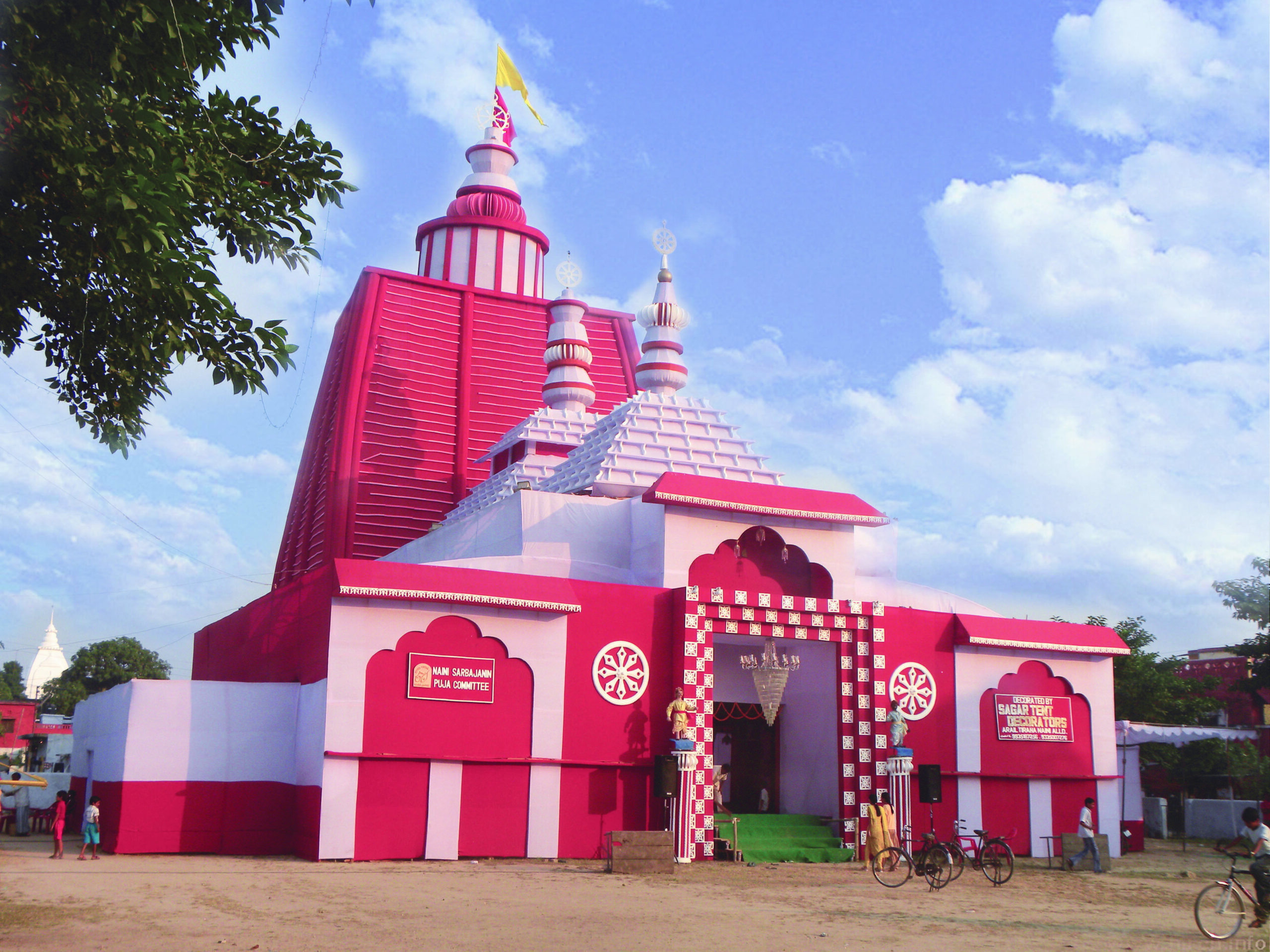
golden Jubilee year
THE GOLDEN JUBILEE :
In 2010, Naini Sarbajanin Puja Committee celebrated it’s 50th Anniversary, i.e. The Golden Jubilee. Just to give a peek of behind the scenes of this event, the planning and budgeting started well about four years before the event i.e. around the end of 2006 or so.Mr. Animesh Chatterjee, the General Secretary and Mr. Gautam Chakraborty, the Treasurer, who also doubled as the Chief Designer, were at the helm of affairs since 1998 and a twelve-year period of hands-on experience really helped to tune and fine-tune the various dynamics involved to, a) make this a gala event that was not witnessed on a scale before, in Naini, and b) make it cost effective to the maximum extent possible due to paucity of funds.
A young new President Mr. Gaurav Ghose was on-boarded not only to provide a fresh impetus and vision but also to mobilize more cash and kind in order to support the hype. The two-in-one Mr. Gautam also made some visits to Kolkata Pandal artists and artisans in West Bengal to see and assess for himself the type of pandal which would both be magnanimous as well as economically viable to our Committee. Who else better than the treasurer to understand the situation first-hand.
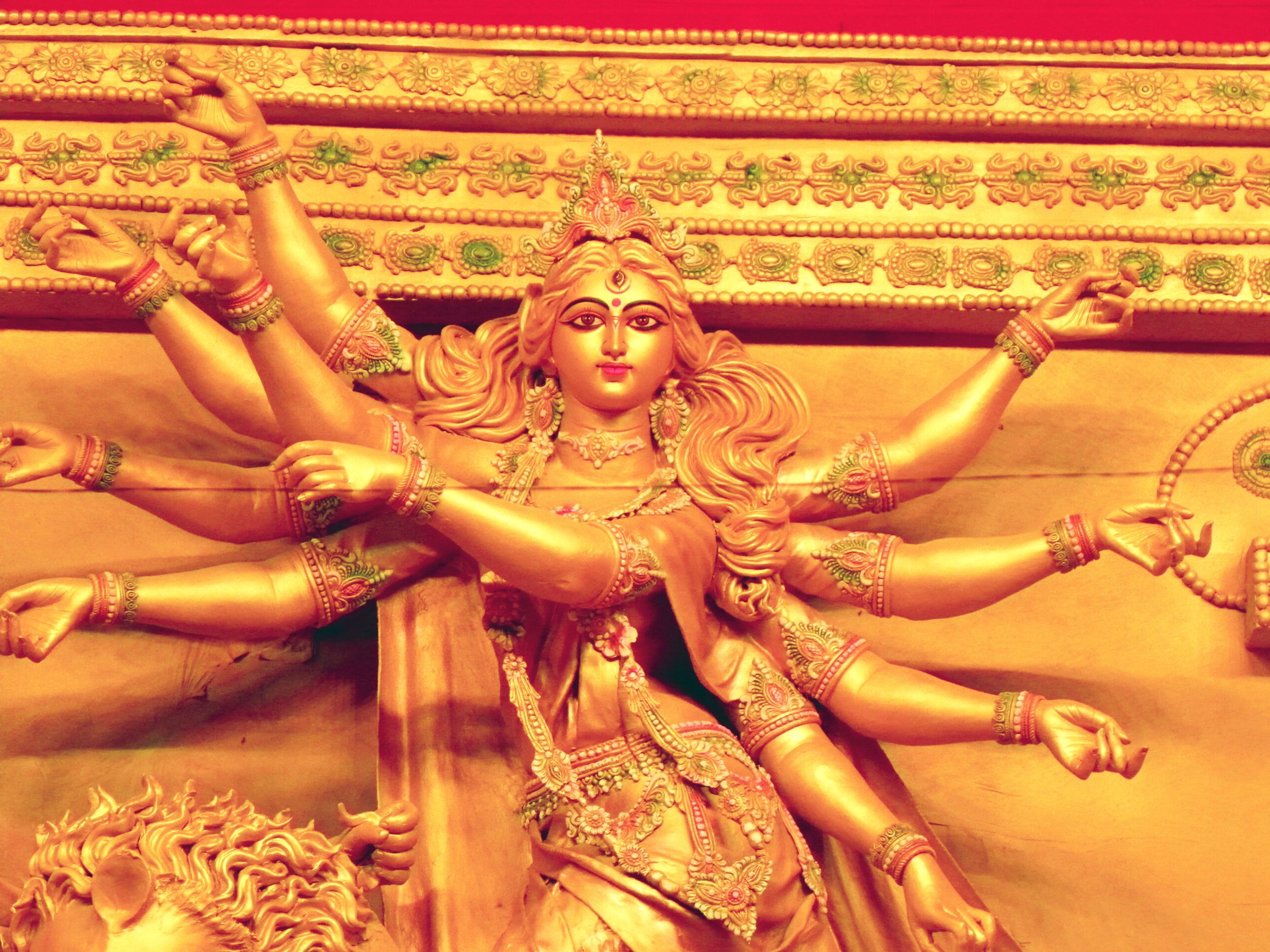
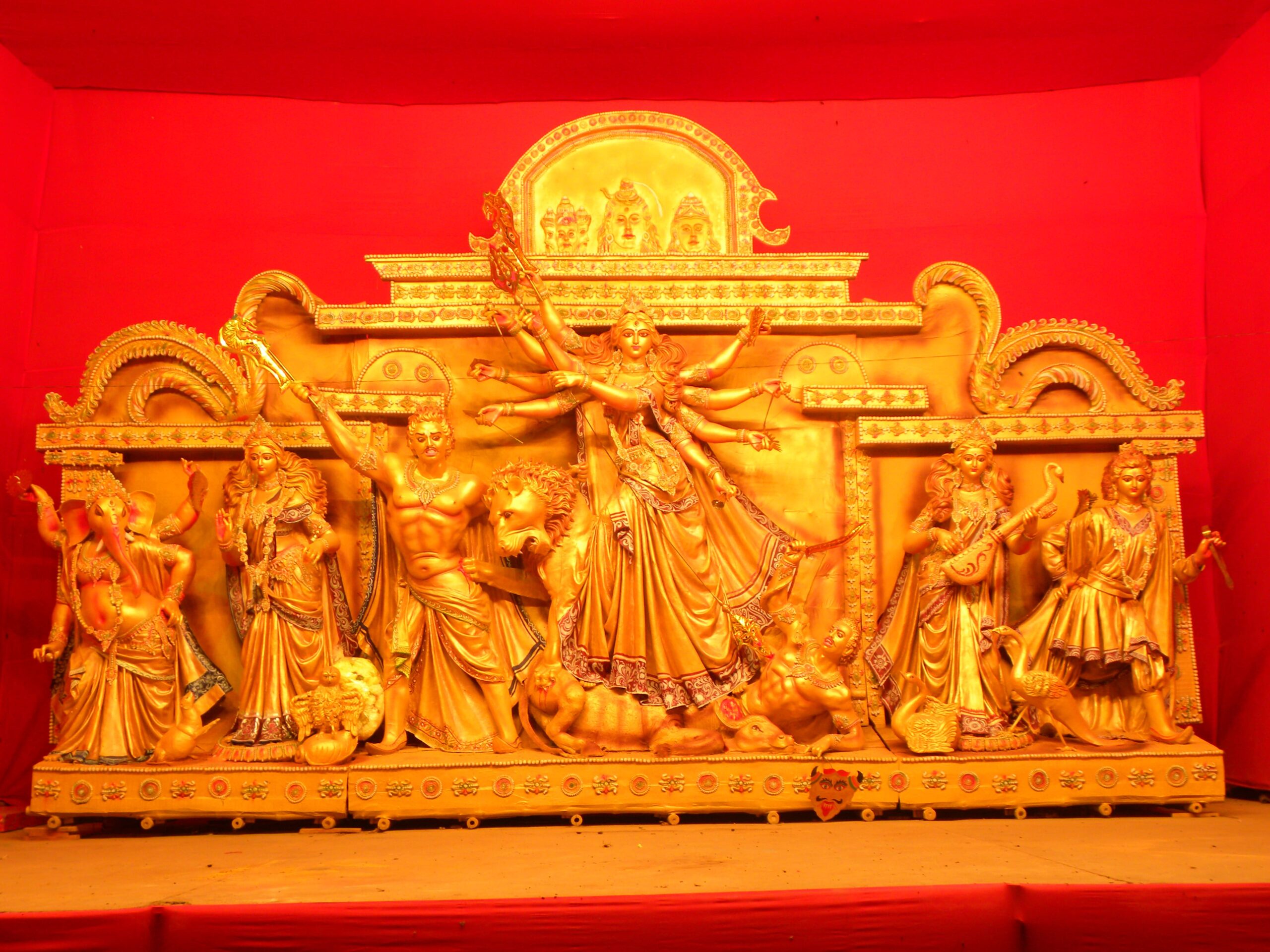
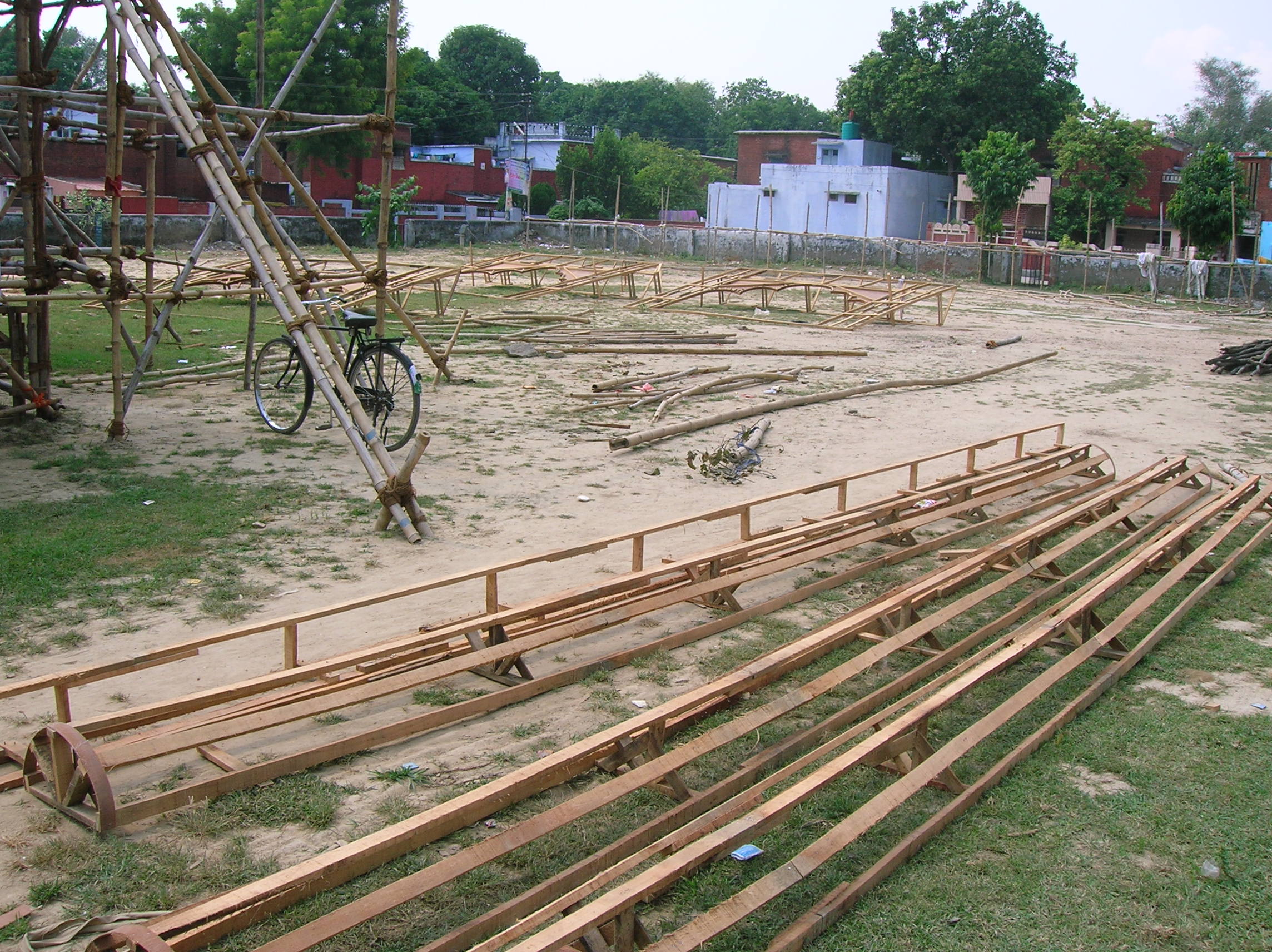
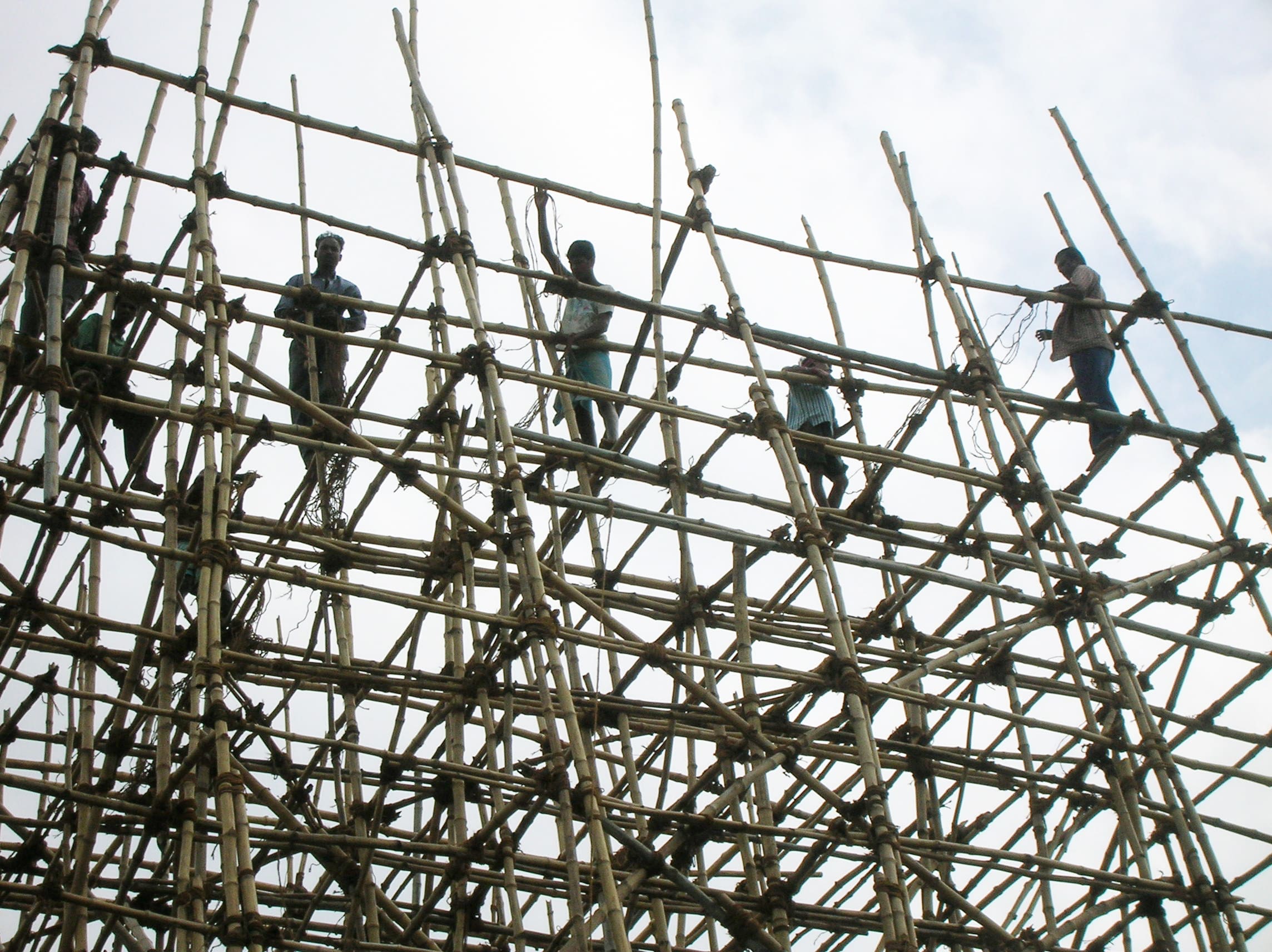
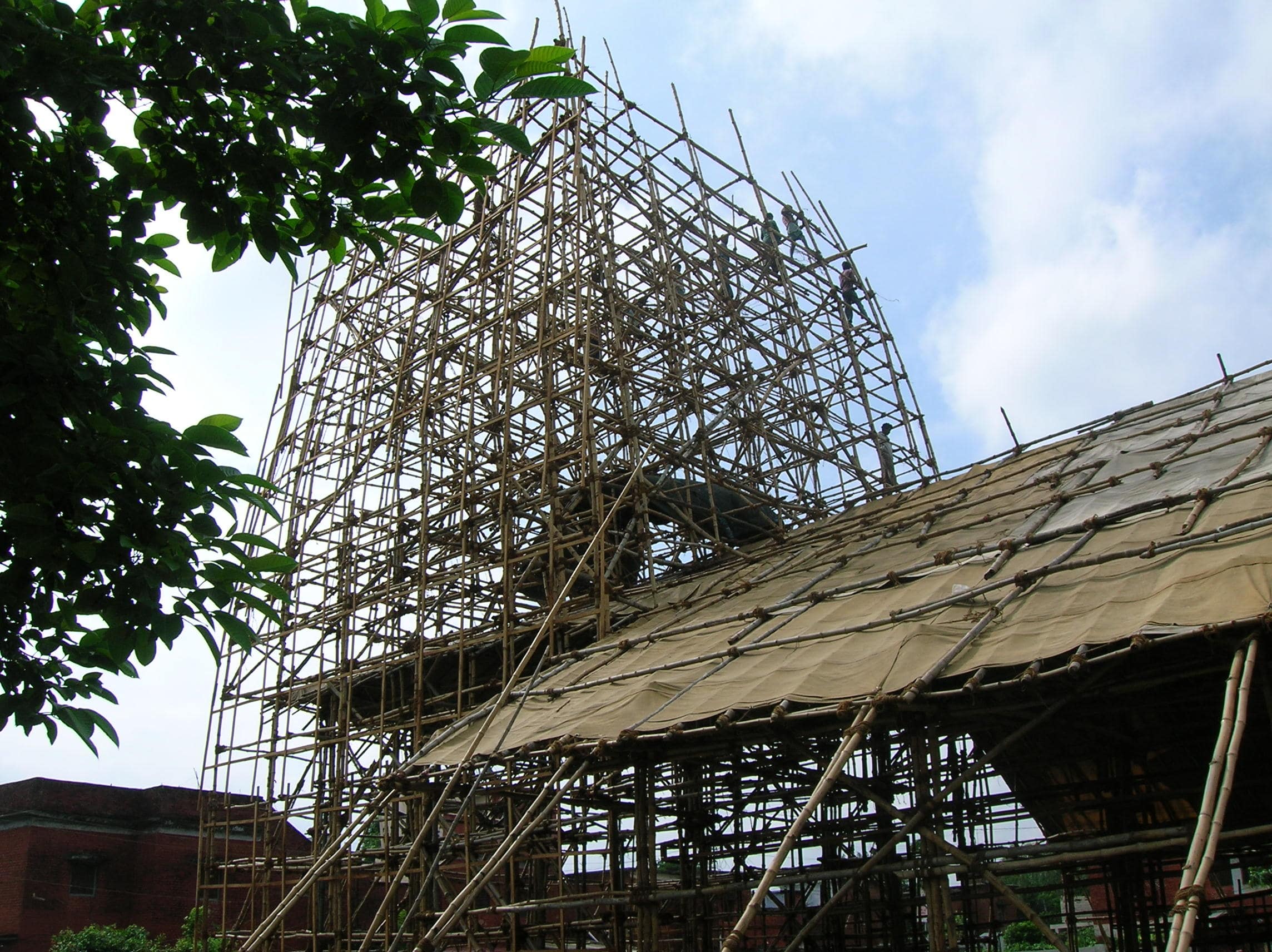
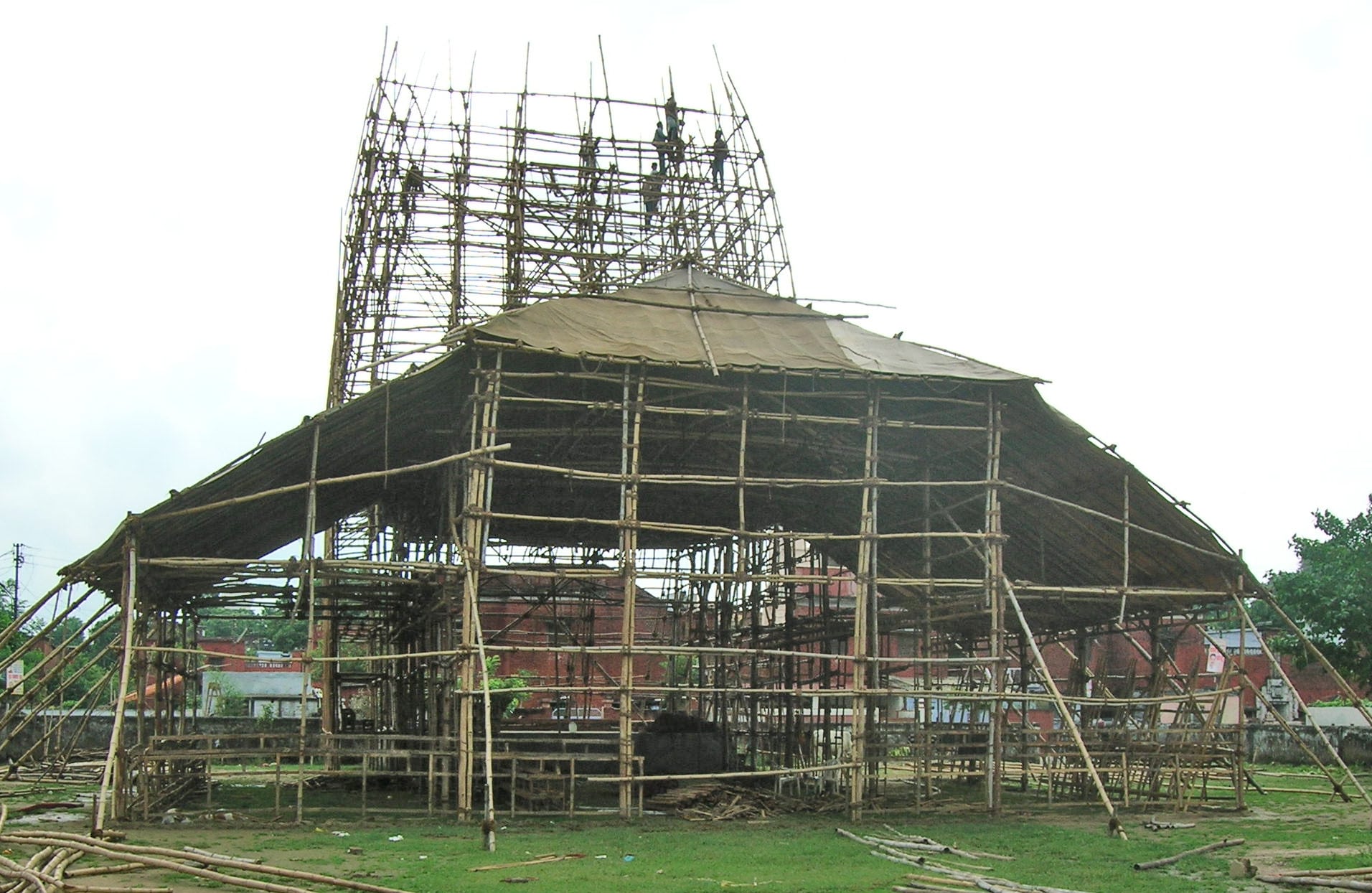
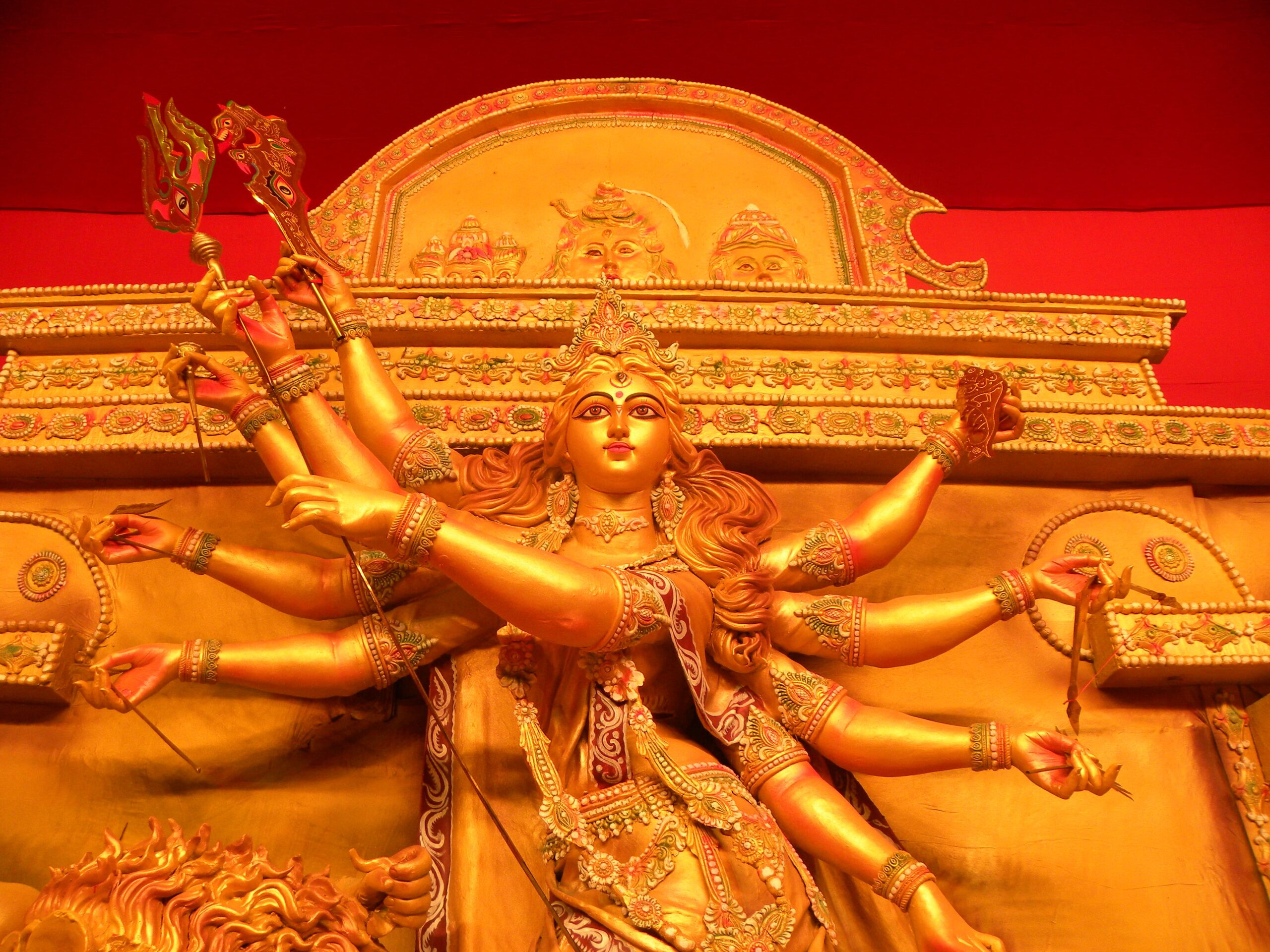
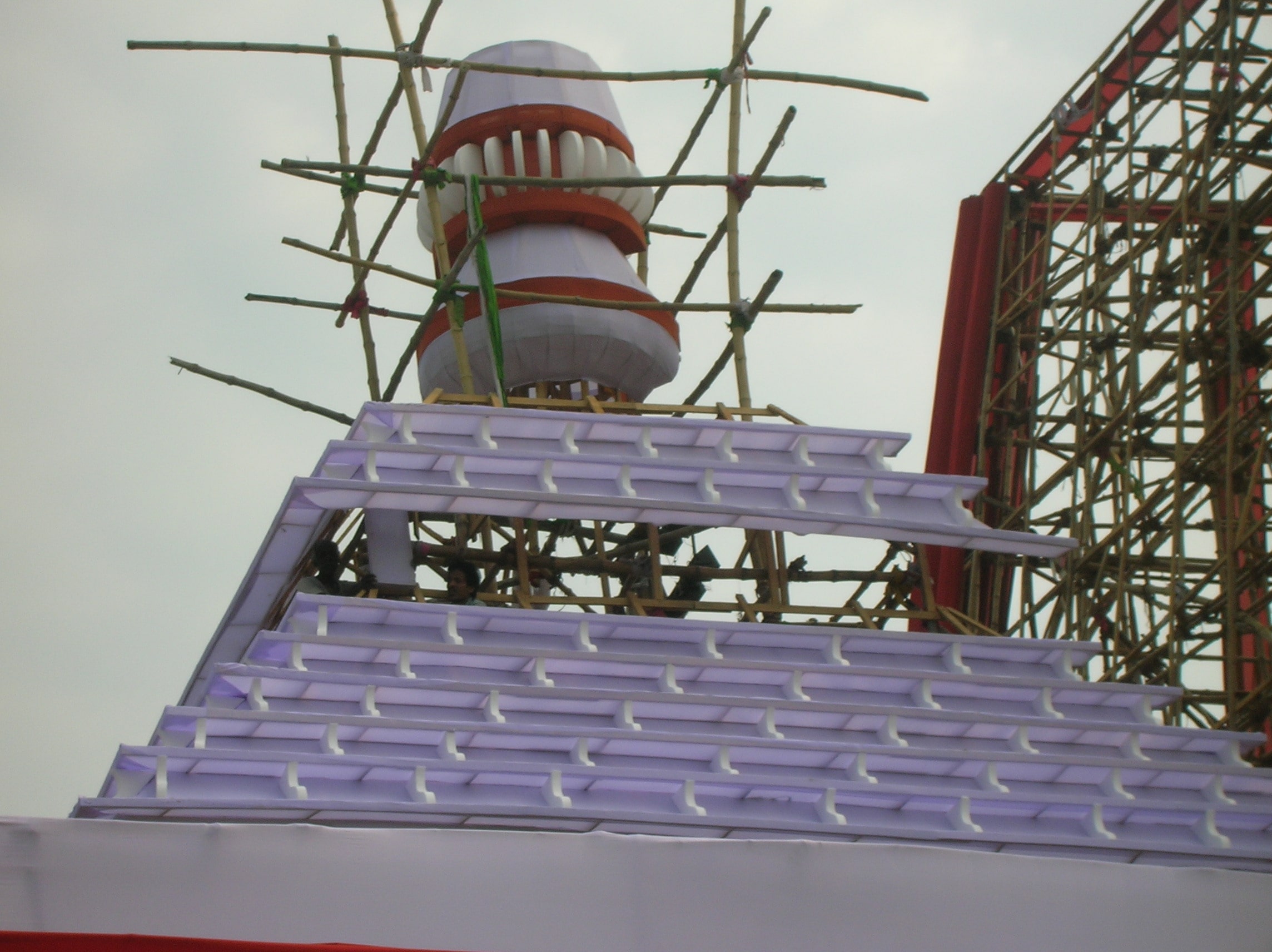
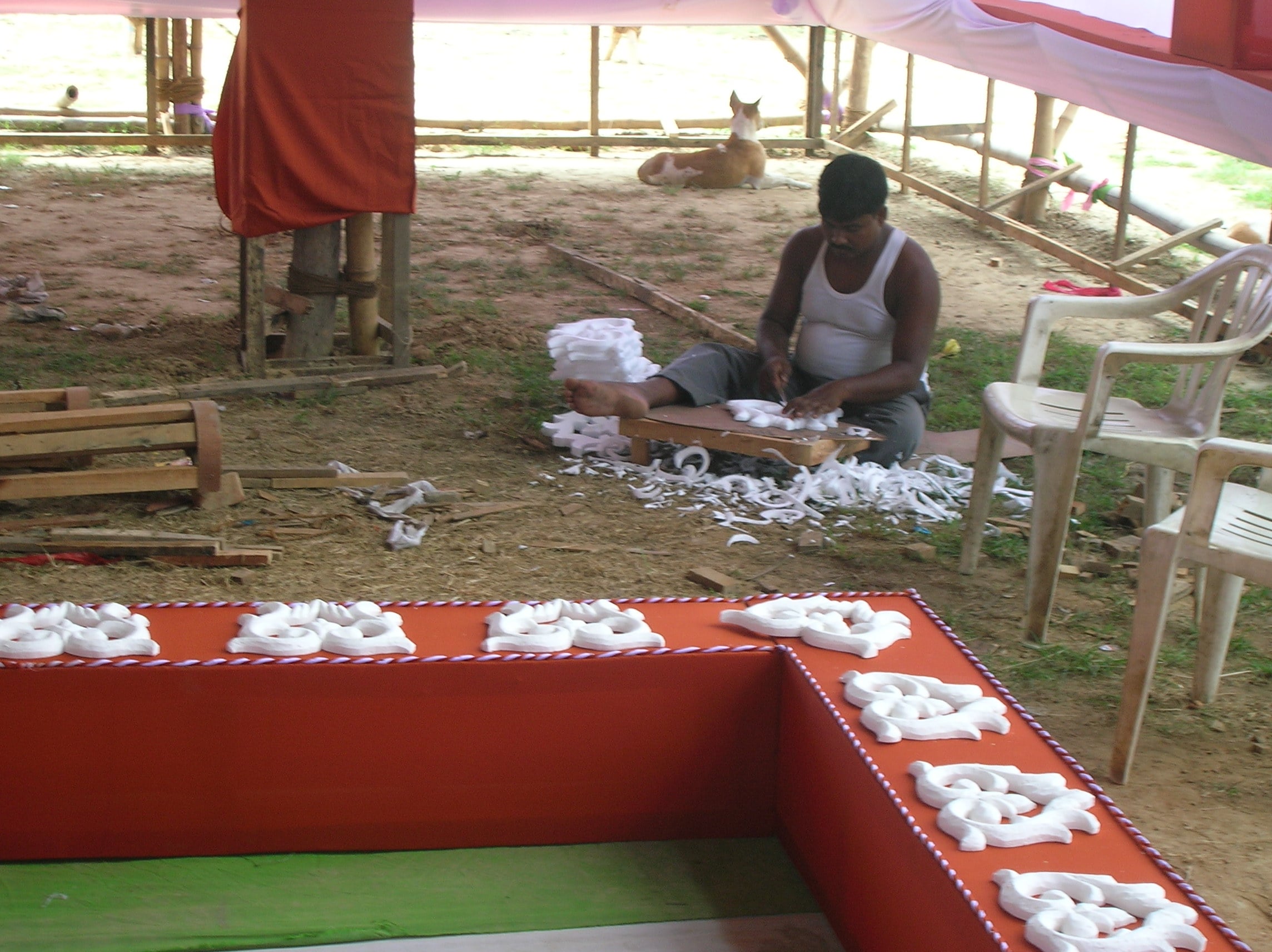
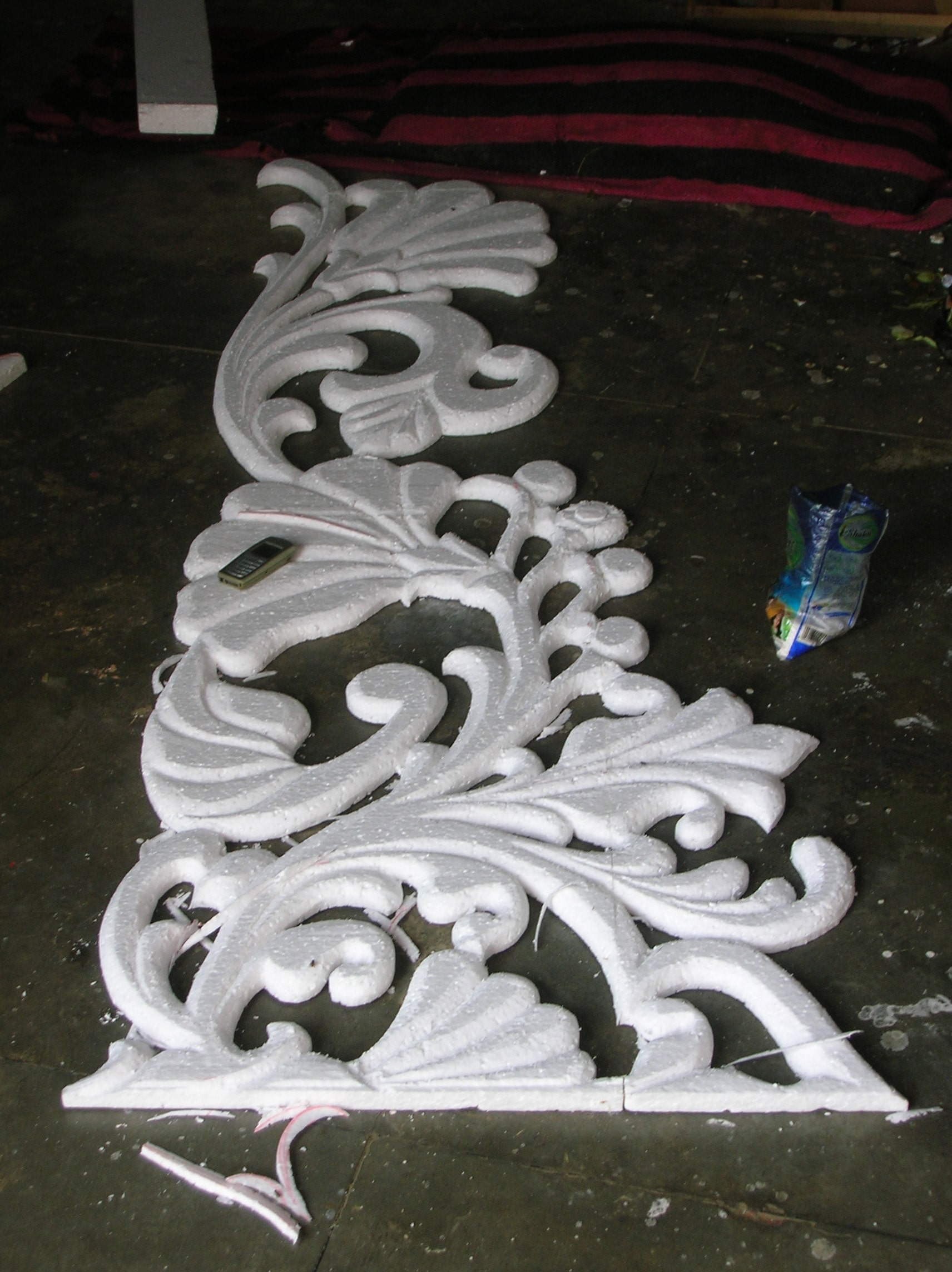
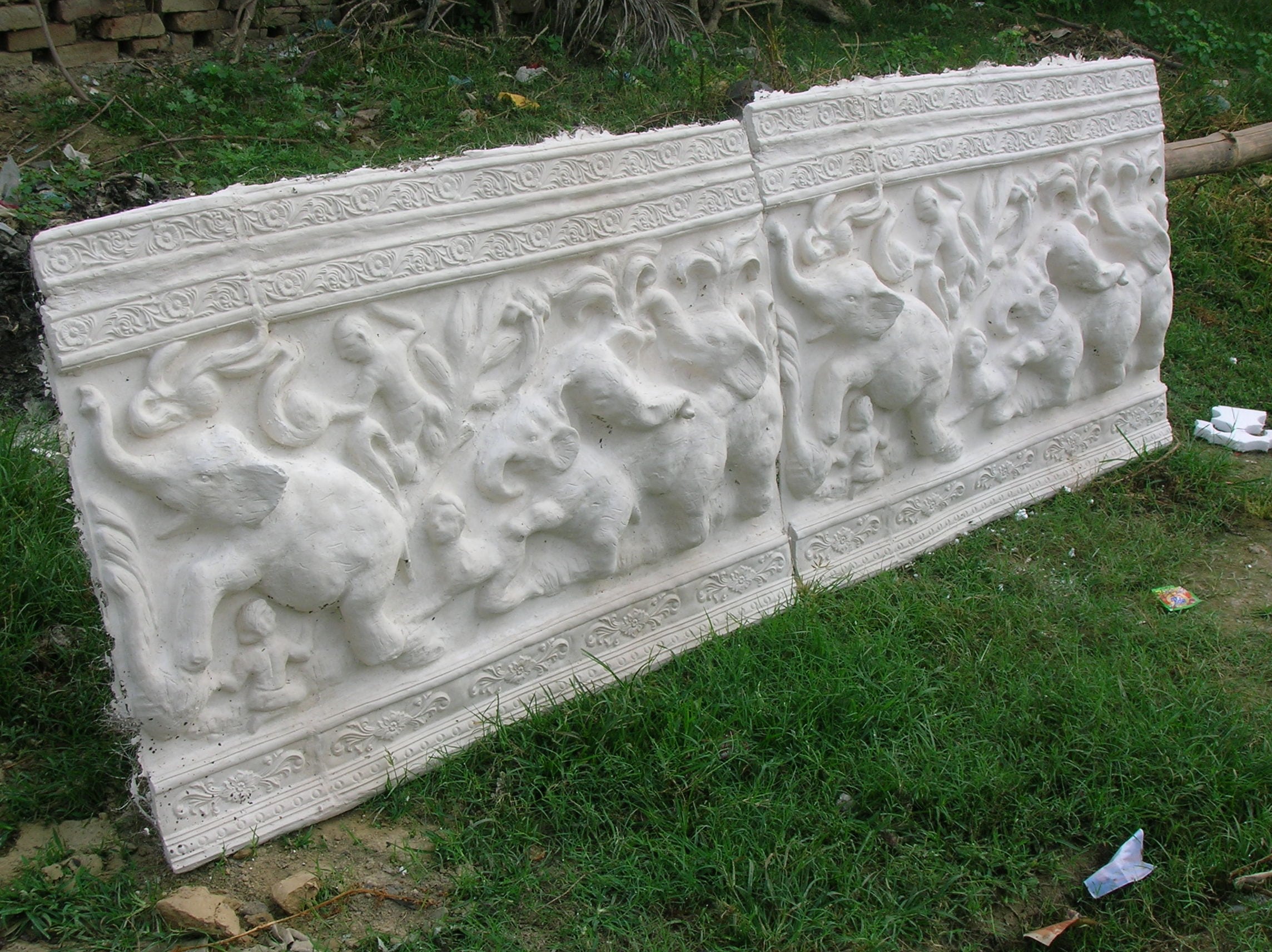
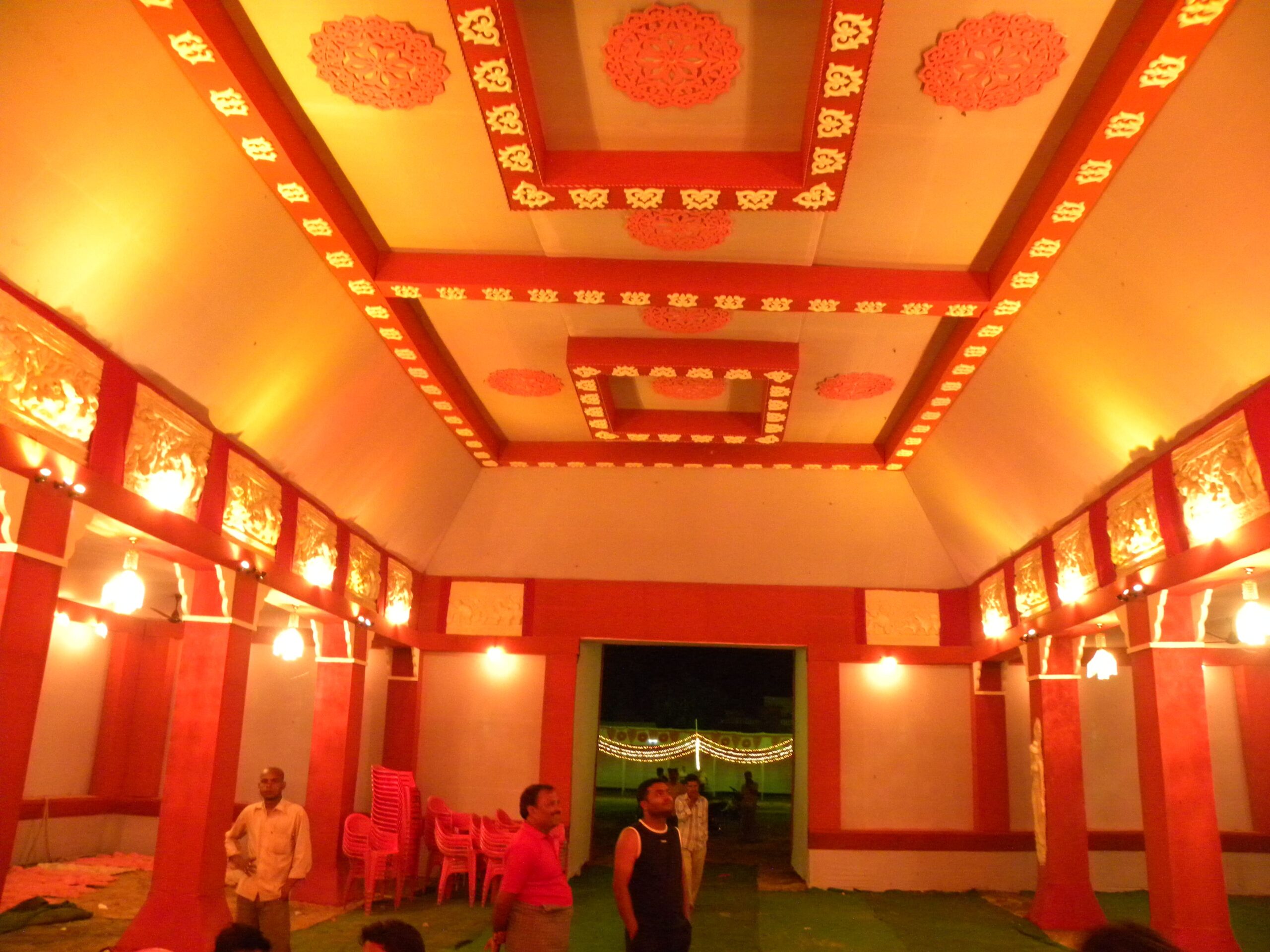
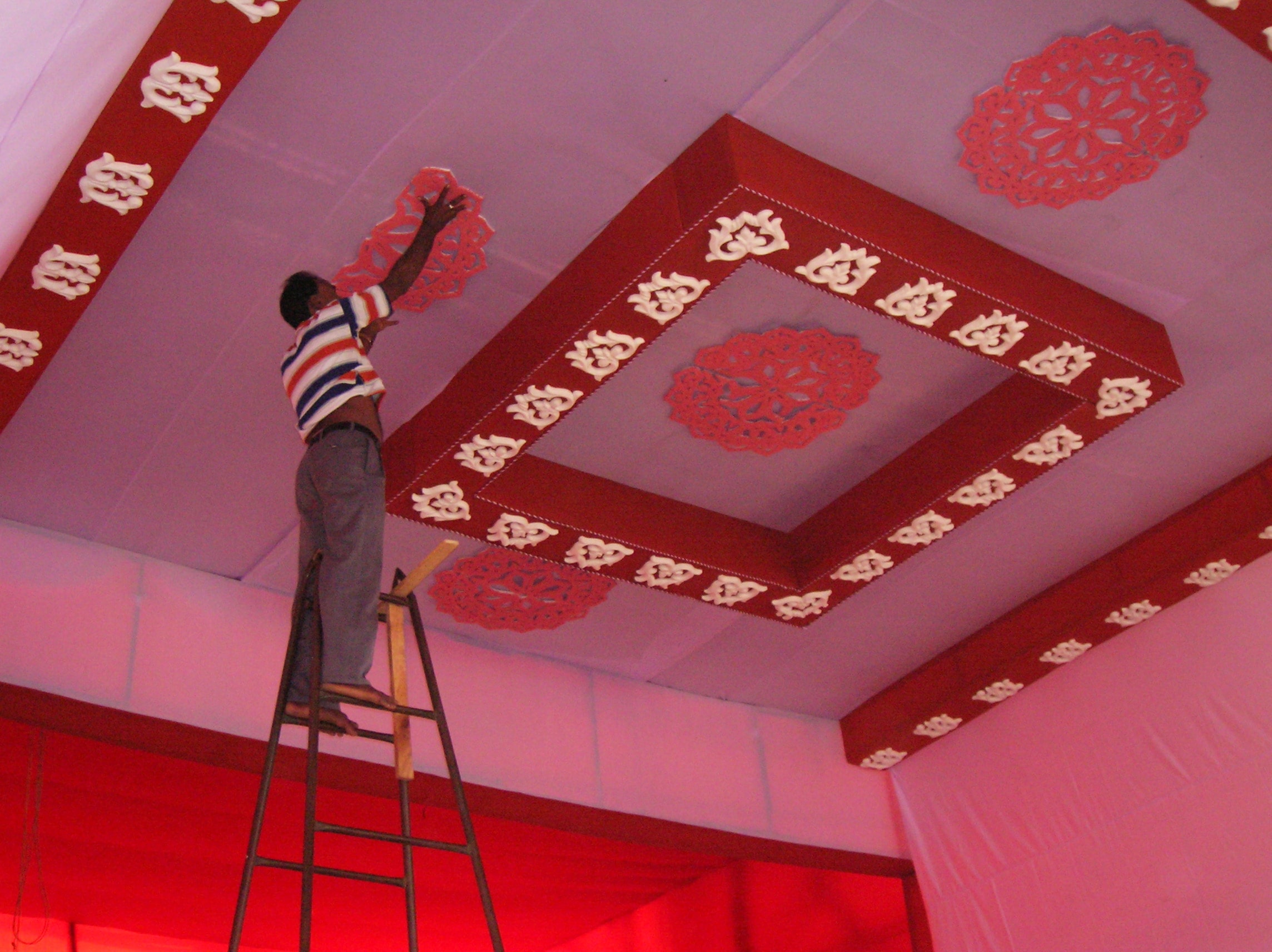
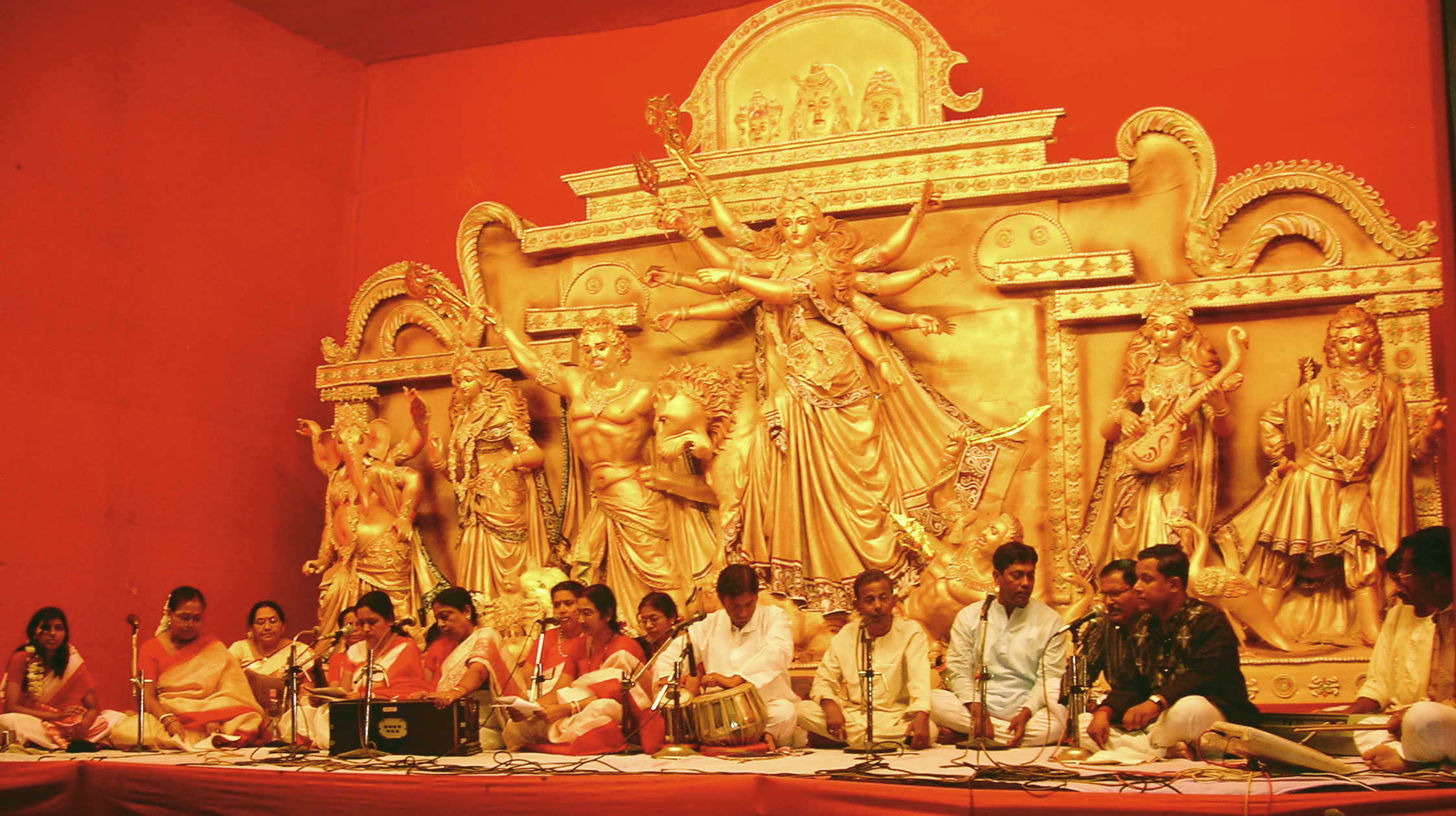
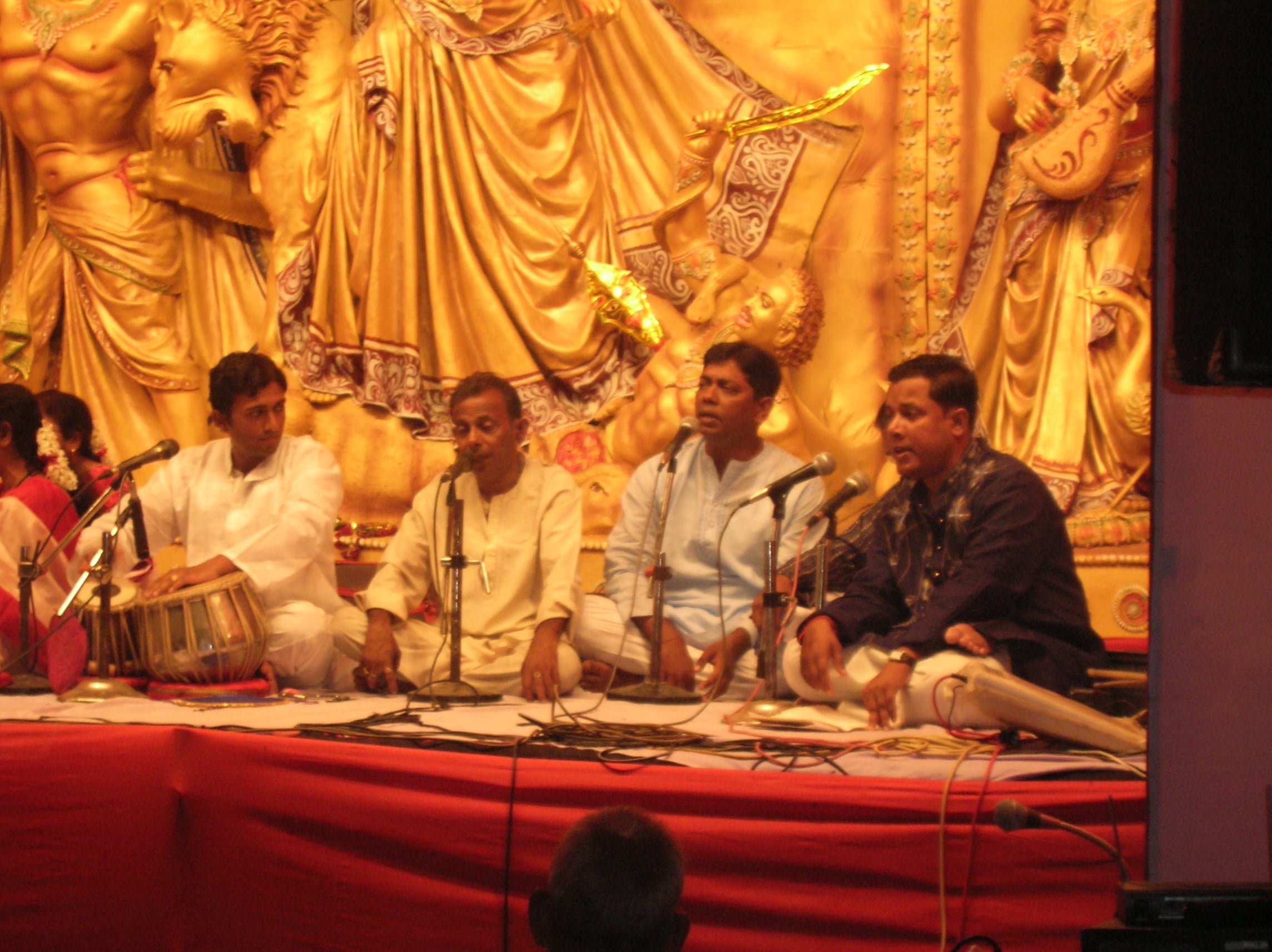
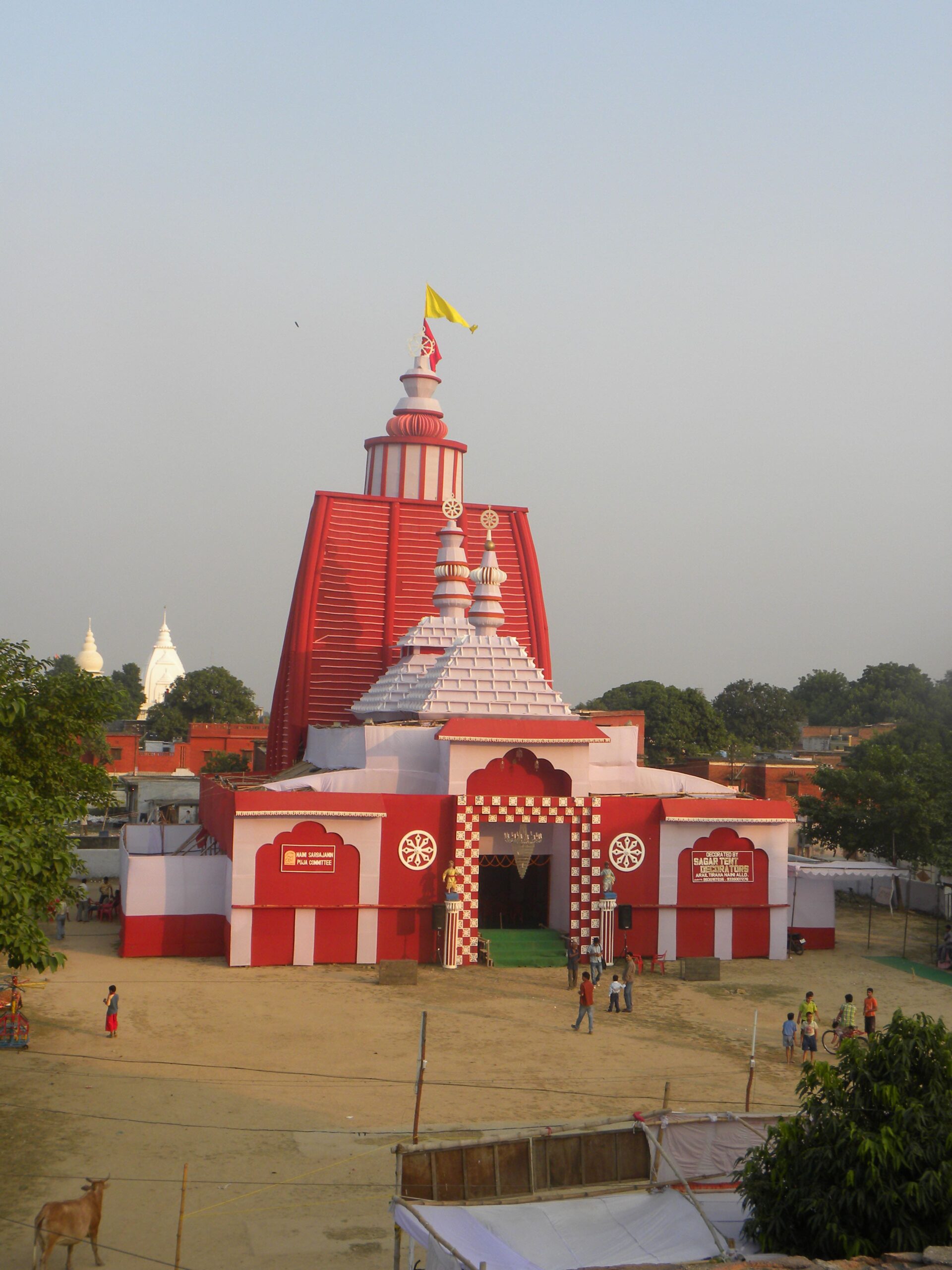
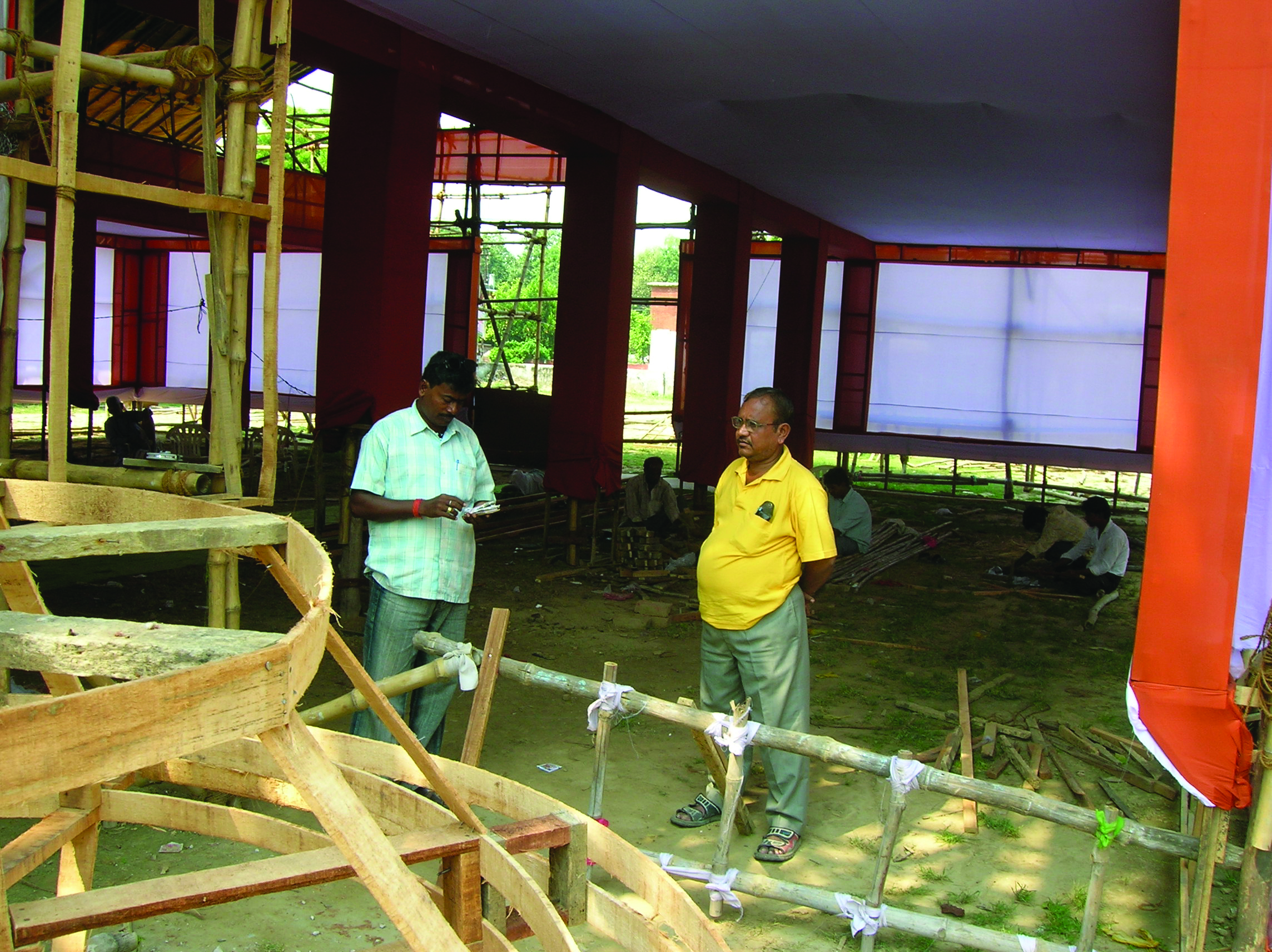
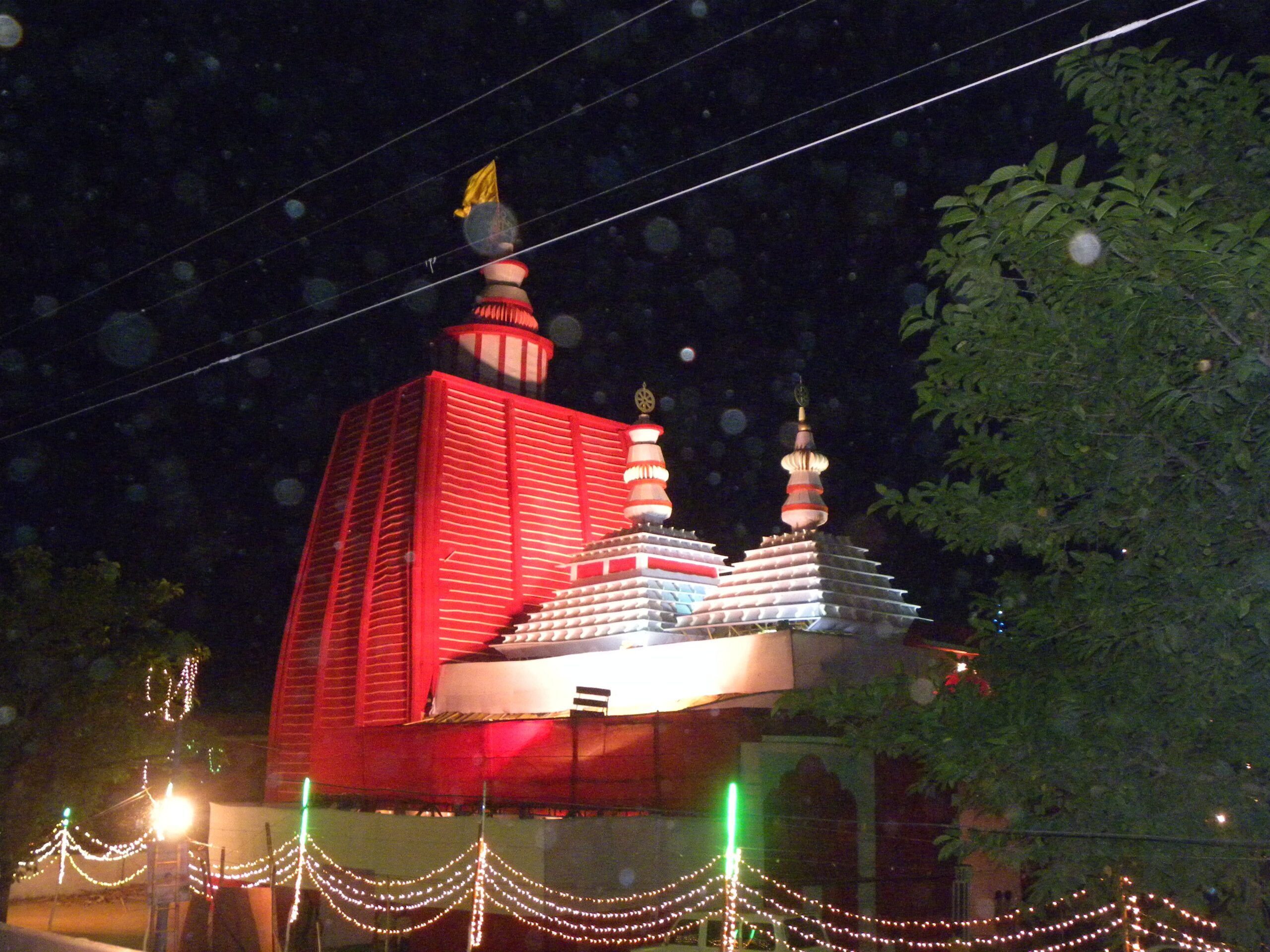
By the end of 2009, the design was finalized to be a replica of Shri Jagannath Temple of Puri. A team of three persons (Mr.Gaurav, Mr.Animesh and Mr.Gautam) scouted the entire geography of Prayagraj (then known as Allahabad) for the appropriate Pandal Decorator, who would meet the requirements of our Puja Committee comprehensively, and which was agreed to by M/s Sagar Decorators, Naini. The Pandal construction started about 45 days in advance from the Chaturthi day (fourth day from the no-moon day or Mahalaya) of the Navratri period. The Pandal constituted of three Shikhars (Temple Peaks), the tallest of them being a massive 60 feet in height. This was perhaps the tallest bamboo structure ever constructed in Naini. The Pratima was also a special one by the famous Late Tinkori Pal (he was very much live and kicking at that time). Befittingly, it was a piece of clay art with all the sarees, dresses, ornaments and other paraphernalia made out of pure clay and in a golden hue. The Goddess stood tall in all her golden glory which could only be brought to life by an artist of his caliber. The sanctum sanctorum of the Mandap was bathed in a dark red shade which literally allowed the Pratima to shine like a golden ornament inside a red cocoon. The entry to the Mandap was through a flight of steps of a staircase, deliberately created to endure a feeling as if one is entering into a temple, and behold a temple it was, truly bewildering.
After the festivities were over with a huge beeline of devotees for four continuous days at the Pandal, it was time for winding up the festivities. The culmination of celebrations started with the Bisarjan Procession. With a plethora of Dhakis and Dhols dancing to their own beats together with the equally mesmerized uniformed (Blue Polo T-Shirts with Yellow collar emblazoned with the Committee’s name) dancing cadre of members and volunteers immersed in frenzy made the whole atmosphere electrifying, more than anticipated. After winding down the traditional route within the colony and the Naini area, the procession headed towards the Saraswati Ghat. With the immersion of the Pratima, it was a grand culmination to the festivities, which for some was the end of a seven-day affair but for the Committee at large was the culmination of a four year old dream. To a large extent, for many from the older generation, this was the last big celebration of their lifetime. In the hindsight, the Golden Jubilee was a huge milestone for the Puja Committee which gave us the belief, the impetus and the courage to leapfrog into the bigger bracket of Grand Puja Celebrations in Allahabad from thereon.